Last updated on September 18th, 2026 at 11:23 am
If you have received a message containing the 🦆 emoji, you may wonder what the sender actually means.
The duck emoji 🦆 usually represents a duck literally, but in texting and online communication, its meaning can change depending on the conversation, relationship, and tone.
People may use it to express playfulness, silliness, cuteness, humor, surprise, or affection. Sometimes, it may simply be included because someone likes ducks or wants to make a conversation more entertaining.
The reason people search for “what does 🦆 mean in text?” is that emojis often communicate feelings that words do not clearly express. A single emoji can be an inside joke, a playful reaction, or a reference to something mentioned earlier.
In 2k26, emojis remain an important part of casual digital communication. Understanding the surrounding message is therefore more useful than assuming that 🦆 has one fixed definition. Its meaning depends heavily on context, tone, and the sender’s intention.
Meaning & Definition
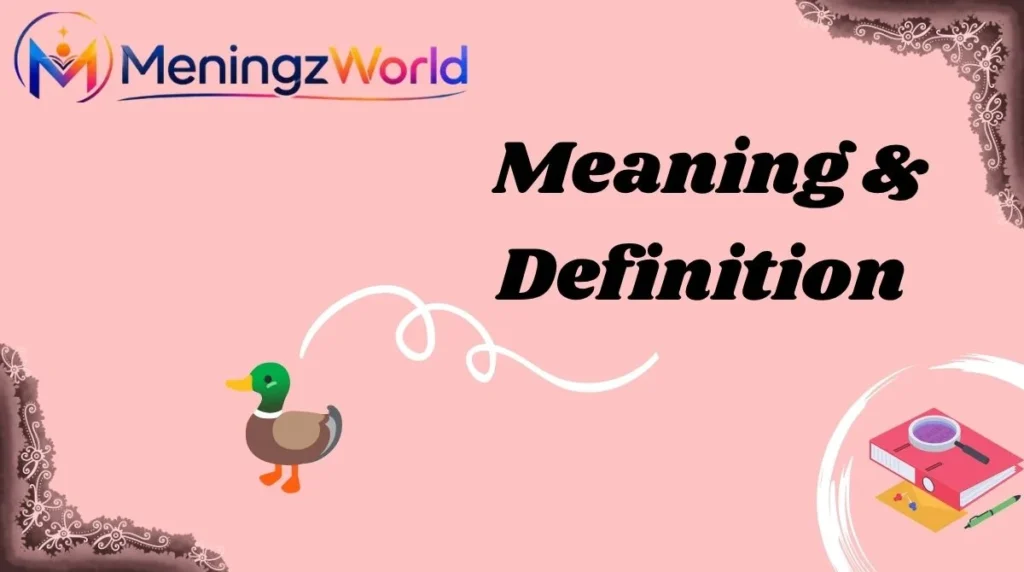
The 🦆 emoji is officially a visual representation of a duck, a waterfowl commonly associated with ponds, lakes, parks, farms, and nature. In its most straightforward use, someone sends 🦆 simply because they are talking about a real duck.
For example:
- “Look what I saw at the park 🦆”
- “There are ducks near the lake 🦆”
- “I bought a duck-shaped toy 🦆”
In these examples, the emoji has a literal meaning.
However, text communication frequently uses emojis beyond their literal definitions. A person may send 🦆 because they want a message to feel funny, cute, random, or lighthearted. The emoji can make an ordinary sentence sound less serious.
For example:
“Okay, I believe you 🦆”
The duck does not necessarily have a dictionary-style meaning here. It may simply add an absurd or humorous element to the message.
Someone might also use 🦆 as a reaction to something strange:
“Why did you do that? 🦆”
Again, the emoji itself does not automatically mean a specific phrase. It could communicate playful confusion or make the question sound less confrontational.
🦆 Can Mean “Cute” or “Adorable”
Ducks are often viewed as cute animals, particularly ducklings. Consequently, the emoji can be used when someone wants to communicate affection or cuteness.
For example:
“You’re so cute 🦆”
In this situation, the emoji is more about the emotional atmosphere than about ducks.
🦆 Can Represent Random Humor
Some people intentionally use unrelated emojis to make conversations humorous. The unexpected appearance of a duck can create a silly or chaotic tone.
“I’m going to sleep now 🦆”
The duck may have no deeper meaning at all. It could simply be the sender’s way of being goofy.
🦆 Can Be an Inside Joke
If two people previously discussed a duck, a funny incident, a nickname, a video, or a personal joke involving ducks, 🦆 can represent that shared memory.
Therefore, the most accurate definition is:
🦆 represents a duck literally and can represent playfulness, humor, cuteness, randomness, or an inside joke depending on context.
Background
The duck emoji belongs to the broader system of visual symbols used in digital communication. Emojis allow people to communicate concepts, emotions, objects, and reactions without writing everything in words.
Animal emojis are particularly flexible because they can work both literally and metaphorically. A person can use 🐶 when discussing a dog, 🐱 when talking about a cat, or 🦆 when mentioning a duck. But the same symbols can also become part of jokes, reactions, usernames, captions, memes, and personal communication styles.
The duck has also developed a recognizable cultural image. Ducks are often associated with water, nature, farms, parks, waddling, quacking, and humor. These associations can influence how people interpret 🦆 in conversation.
For instance, someone might write:
“Everything is fine 🦆”
The emoji can create a humorous contrast if the surrounding conversation suggests that everything is obviously not fine. The sender may be using the duck as a playful way to soften the statement.
Why Does Context Matter?
Unlike a conventional word, an emoji rarely has one universal interpretation in every conversation. The same 🦆 could mean completely different things in different situations.
Consider these examples:
“There’s a duck outside 🦆”
Here, the meaning is literal.
“That was the weirdest conversation ever 🦆”
Here, it may express humor or randomness.
“You’re my favorite little duck 🦆”
Here, it could be affectionate or teasing.
“Duck! 🦆”
Here, the sender might literally be referring to the animal or making a playful command.
This demonstrates why interpreting emojis requires looking at the words surrounding them.
Personal Communication Styles
Some people use certain emojis repeatedly. One person may use 🦆 because they genuinely like ducks, while another may use it as their signature joke. A third person may send it randomly.
Consequently, the sender’s previous messages can be more informative than a generic emoji definition.
Usage in Different Contexts
In Casual Chat
In ordinary texting, 🦆 is generally playful and informal. It can appear when discussing animals, nature, food, jokes, or everyday experiences.
Example:
“Guess what I saw today? 🦆”
The sender may be introducing a story about seeing a duck.
It can also be used as a humorous reaction:
“Bro really did that 🦆”
Here, the duck could simply add a silly tone.
On Social Media
On social platforms, 🦆 can appear in captions, comments, reactions, memes, and short posts. A person might use it alongside a photograph of a duck, a funny animal video, or a humorous situation.
For example:
“Weekend vibes 🦆”
The emoji may have no literal connection to the post. It can simply contribute to the person’s playful online style.
In Professional Fields
In professional communication, 🦆 has no generally accepted universal professional meaning. If it appears in a workplace message, its interpretation depends strongly on the organization and conversation.
For example, a wildlife researcher might use 🦆 literally when discussing ducks. A marketing team might use it in a playful campaign. A coworker might use it casually in an informal team chat.
In formal emails, reports, contracts, scientific papers, and official documentation, the emoji generally should not be assumed to have a specialized meaning unless the organization has explicitly established one.
Meaning in Chat, WhatsApp, Instagram, and TikTok
On WhatsApp, 🦆 can be used in personal conversations, reactions, jokes, statuses, and group chats.
On Instagram, it may appear in captions or comments, especially with animal-related content or humorous posts.
On TikTok, it may accompany a funny video, animal content, a meme, or an intentionally random comment.
Across all these platforms, the basic principle remains the same: the surrounding context determines the intended meaning.
Meaning in Physics, Medical, and Aircraft Terminology

The 🦆 emoji itself does not have a standard universal technical definition in physics, medicine, or aviation.
This distinction is important because an emoji can visually resemble an object without being an official technical symbol.
Physics
In physics, 🦆 is not a recognized standard unit, mathematical operator, or universal physics notation. If someone uses the emoji in a physics conversation, it is likely being used informally, humorously, or as part of a specific example.
A physics student might write:
“Today’s experiment went badly 🦆”
The emoji would express personality rather than physics terminology.
Medical Context
In medicine, 🦆 does not have a standard universal medical definition. A medical professional could theoretically use it in informal messaging, but the emoji should not be interpreted as a diagnosis, medical abbreviation, or clinical instruction.
If a medical message contains 🦆, the surrounding words should be considered rather than assigning a specialized medical meaning to the emoji.
Aircraft and Aviation
Similarly, 🦆 is not a universal aviation symbol representing an aircraft system, warning, procedure, or standard aviation command.
Aviation professionals may use the emoji casually in personal conversations, but it should not be confused with formal aviation terminology.
Therefore, if someone asks whether 🦆 has a specific meaning in these technical fields, the safest answer is:
No standard technical meaning exists for the emoji itself; context-specific use is possible.
Common Misconceptions
One common misconception is that 🦆 always means the sender is talking about a real duck. Although that is the literal interpretation, people frequently use animal emojis for humor, personality, or emotional expression.
Another misconception is that every emoji has a hidden slang definition. Not every unusual emoji represents secret internet slang. Sometimes a person simply likes the symbol or uses it randomly.
A third misconception is that 🦆 automatically represents flirting. It can appear in romantic conversations, but the emoji itself is not inherently romantic or sexual.
For example:
“You’re adorable 🦆”
This could be affectionate, friendly, teasing, or romantic depending on the relationship.
Another misconception is that 🦆 has one fixed meaning on every platform. Platform, community, age group, friendship, and personal habits can all influence interpretation.
Finally, people sometimes assume that sending an unusual emoji means something negative. In most ordinary contexts, 🦆 is neutral or playful rather than aggressive.
Similar Terms & Alternatives
Several emojis may appear in conversations involving animals, humor, or cuteness. However, they should not automatically be treated as interchangeable.
| Emoji/Term | Common Meaning | Typical Tone | Difference from 🦆 |
|---|---|---|---|
| 🦆 | Duck, playfulness, randomness | Playful | Specifically represents a duck |
| 🐥 | Chick/baby bird | Cute | More strongly associated with a young bird |
| 🐤 | Baby chick | Cute/playful | Usually suggests a chick rather than a duck |
| 🐦 | Bird | Neutral | Much broader animal category |
| 🦢 | Swan | Elegant | Often associated with beauty or elegance |
| 🐸 | Frog, humor, reactions | Playful | Frequently used for memes and humorous reactions |
| 🐔 | Chicken/rooster | Casual | Represents poultry rather than a duck |
| “quack” | Duck sound or joke | Humorous | A word rather than an emoji |
| “duck” | Actual animal or metaphor | Neutral | The literal written word is less visually expressive |
The important difference is that 🦆 provides visual and emotional context while a word such as “duck” simply identifies the animal.
How to Respond to 🦆
Your response should depend on why the other person sent it.
If they are talking about an actual duck, you can respond naturally:
“That’s adorable!”
If they send it randomly, you can play along:
“Why the duck? 😂”
If it is part of an inside joke, respond according to the shared joke.
If you are unsure about their intention, asking directly is usually the best approach:
“What does the duck mean? 😂”
That question is casual and gives the other person an opportunity to explain.
If You Think It Is Flirty
If someone sends 🦆 during a romantic conversation, avoid assuming that the emoji itself is a definite romantic signal. Look at the complete conversation.
If the person is already flirting, the emoji might simply add a cute or playful feeling.
You could respond:
“Okay, that’s a random but cute emoji 😂”
This keeps the conversation light without making an incorrect assumption.
Differences From Similar Words
The meaning of 🦆 can sometimes be confused with words or phrases that involve ducks, but the emoji itself is broader.
“Duck”
“Duck” normally identifies the animal. It can also function as a verb in English, such as “duck down” or “duck your head.”
The emoji usually does not communicate those grammatical meanings automatically.
“Quack”
“Quack” can refer to the sound associated with a duck. It can also have other meanings in English, including a person pretending to have professional expertise.
Therefore, 🦆 and “quack” are related but not identical.
“Cute”
A duck emoji may communicate cuteness, but 🦆 does not literally mean “cute.” The sender chooses the emoji based on the situation.
“Silly”
Similarly, 🦆 can contribute to a silly mood, but it does not have a fixed dictionary meaning of “silly.”
The major difference is that emojis are contextual visual symbols, whereas words have more defined linguistic meanings.
Relevance in Online Conversations & Dating Apps
In online conversations, emojis can make messages feel more personal and expressive. The 🦆 emoji can be particularly useful when someone wants to create a playful or relaxed atmosphere.
On dating apps, its interpretation becomes even more dependent on context.
If someone sends:
“You’re pretty funny 🦆”
the duck might simply make the message more playful.
If someone writes:
“Good morning, duck 🦆”
the sender may be using “duck” as a cute nickname.
However, there is no universal dating-app code saying that 🦆 automatically means attraction. Do not interpret the emoji alone as proof of romantic interest.
Look for broader signals such as:
- Whether they regularly initiate conversations
- Whether they ask personal questions
- Whether they use affectionate language
- Whether they continue conversations naturally
- Whether they suggest meeting or spending time together
- Whether the emoji appears alongside other clearly flirtatious messages
🦆 as a Nickname
Some people use animal names as affectionate nicknames. “Duck” or “ducky” can sometimes be used playfully between people who know each other.
If someone calls you “duck” and adds 🦆, they may be reinforcing that nickname.
🦆 as an Inside Joke
Dating partners and friends often develop their own language. An emoji can become meaningful because of a shared experience rather than because of its general internet meaning.
For example, if you once saw a duck together and joked about it, the emoji could later become a private symbol between you.
When Should You Be Careful?
If the conversation is serious, professional, or emotionally sensitive, avoid assuming that 🦆 carries a hidden meaning. Ask for clarification when necessary.
The safest interpretation is usually the simplest one unless the surrounding conversation clearly indicates otherwise.
FAQs
What Does 🦆 Mean in Text?
The 🦆 emoji usually represents a duck, but in texting it can also be used playfully to express humor, silliness, cuteness, or a lighthearted mood. Its meaning depends on the context of the conversation.
What Does the 🦆 Emoji Mean in Chat?
In chat, 🦆 commonly refers to a duck or something related to birds, nature, or animals. Friends may also use it simply as a funny or random emoji to make a conversation more playful.
What Does 🦆 Mean on WhatsApp?
On WhatsApp, 🦆 can have different meanings depending on the message. It may literally mean “duck,” or someone may use it to add humor, cuteness, or a quirky tone to their message.
What Does 🦆 Mean on Instagram?
On Instagram, the 🦆 emoji can be used in captions, comments, or direct messages when talking about ducks, animals, nature, or funny situations. Sometimes it is used just for its cute or humorous appearance.
Is the 🦆 Emoji Flirty?
The 🦆 emoji does not have a standard flirty meaning. However, someone might use it playfully or jokingly in a flirty conversation. The intended meaning depends on the surrounding words and the relationship between the people chatting.
Can 🦆 Have a Hidden Meaning in Texting?
Yes, 🦆 can sometimes have a personal, humorous, or inside-joke meaning between people. Unlike common texting abbreviations, the duck emoji does not have one fixed hidden meaning, so the context is important when interpreting it.
Conclusion
The 🦆 emoji generally represents a duck, but its meaning in texting can extend beyond the literal animal. Depending on the situation, it may communicate cuteness, humor, randomness, affection, playfulness, or an inside joke. It does not have one universal secret meaning that applies to every conversation.
On WhatsApp, Instagram, TikTok, dating apps, and ordinary text messages, the surrounding words and relationship between the people involved are essential for understanding the sender’s intention.
In professional, physics, medical, and aviation contexts, 🦆 does not have a universally recognized technical definition.
If someone sends you 🦆 and you cannot understand why, the best approach is to consider the previous messages or simply ask. In many cases, the sender may have chosen it just because it looks funny, cute, or unexpected.
Ultimately, emojis work as flexible visual language. Their meaning comes not only from the symbol itself but also from context, personality, conversation, and shared experiences.